
Nothing says “weekend morning” like the smell of Classic French Toast sizzling in the pan. It’s been our family’s lazy-Sunday tradition since I was a kid – my dad would hum off-key while flipping golden slices, and we’d all fight over who got the crispiest edges. This simple recipe transforms basic pantry staples into something magical in just 15 minutes. That perfect balance of crispy outside and custardy inside? Pure breakfast bliss.
What makes Classic French Toast so special is how forgiving it is. Even my disastrous early attempts (think charcoal briquettes) taught me that with the right technique, anyone can master this comforting dish. Now I’m passing along all those hard-earned tips so you can start your own delicious traditions.
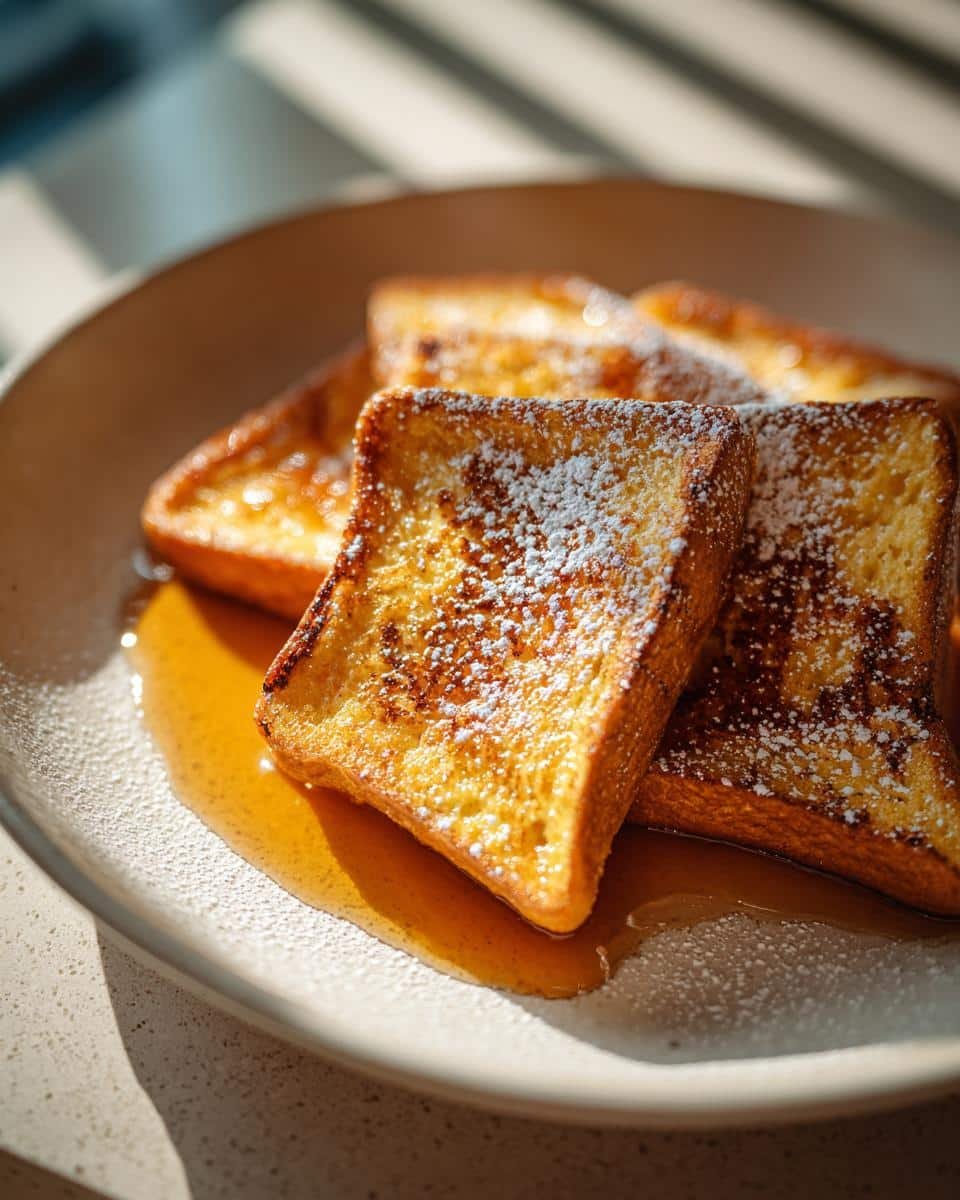
Ingredients for Classic French Toast
Gather these simple ingredients – I promise you probably have most in your kitchen right now! The magic happens with:
- 4 slices of day-old brioche bread (½-inch thick) – trust me, stale bread soaks up the custard better without turning to mush
- 2 large eggs – fresh ones give that gorgeous golden color
- ½ cup whole milk – none of that skim stuff, we want richness!
- 1 teaspoon pure vanilla extract – the good kind makes all the difference
- ½ teaspoon ground cinnamon – just enough warmth without overpowering
- 1 tablespoon granulated sugar – for that perfect caramelized crust
- 1 tablespoon unsalted butter – for frying up those beautiful golden slices
See? Nothing fancy – just honest ingredients that transform into something extraordinary when combined with love (and maybe a little extra butter).
How to Make Classic French Toast
Now comes the fun part – transforming those simple ingredients into golden, custardy perfection! I’ve burned my fair share of French toast over the years (who knew “medium heat” wasn’t actually “high heat”?), so follow these steps carefully for foolproof results every time.
Step 1: Prepare the Egg Mixture
Grab your favorite mixing bowl – I use a wide, shallow one that lets me dunk bread easily. Crack in those two large eggs and whisk them like you mean it! You want them completely smooth with no stringy bits. Slowly pour in the milk while whisking to create that silky custard base.
Here’s my secret: add the vanilla extract and cinnamon directly into the sugar first, then mix them into the wet ingredients. This prevents clumpy cinnamon spots. The mixture should coat the back of a spoon nicely – not too thick, not too thin. Think melted ice cream consistency.
Step 2: Soak the Bread
This step separates okay French toast from “oh wow” French toast! Heat your pan over medium-low first (more on that in a sec) while you soak the bread. Dip each slice for about 20 seconds per side – set a timer if you need to!
Watch closely – the bread should drink up the custard but still hold its shape. If it starts looking soggy or falling apart, you’ve gone too far. Let each slice rest on a wire rack for a minute after dipping. This lets the custard distribute evenly without pooling at the bottom.
Step 3: Cook to Golden Perfection
Okay, here’s where the magic happens. Your pan should be heated to that perfect medium-low temp – test it by flicking a drop of water in. If it sizzles gently, you’re golden (pun intended). Melt your butter until it foams slightly but doesn’t brown.
Gently lay in your soaked bread slices. Now resist the urge to poke and prod! Let them cook undisturbed for 2-3 minutes until you see golden edges creeping up the sides. Flip carefully with a thin spatula. I like to baste the cooked side with melted butter from the pan for extra richness.
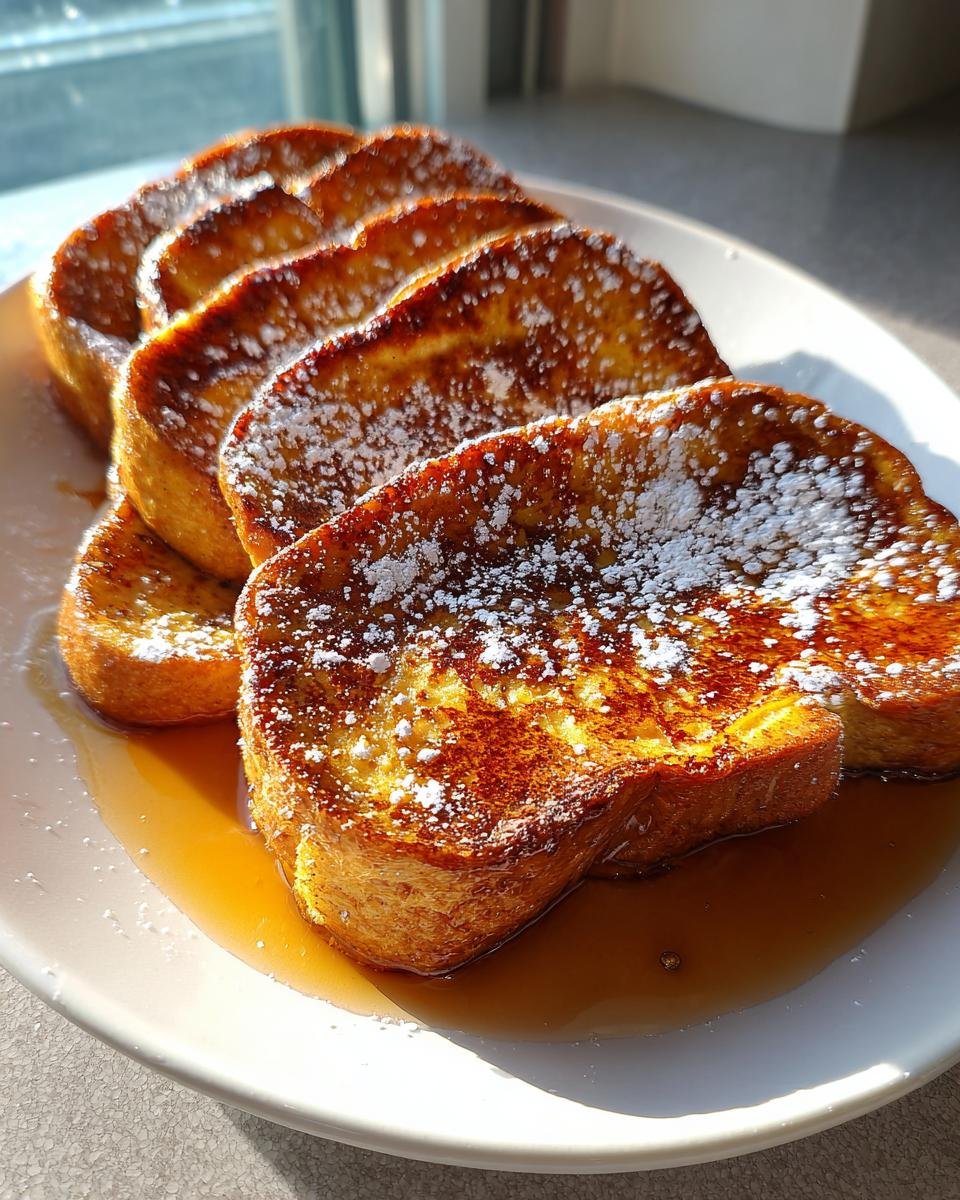
When both sides are beautifully caramelized and the center feels springy to the touch, transfer to a warm oven while you cook the rest. That first bite of crispy-on-the-outside, custardy-on-the-inside perfection? Worth every second!
Pro Tips for the Best Classic French Toast
After years of trial and error (and more than a few breakfast fails), here are my can’t-live-without tips for perfect French toast every time:
- Stale bread is your friend – I purposely leave bread out overnight because fresh slices turn to mush. Day-old brioche or challah absorbs custard beautifully while keeping its structure.
- Taste as you go – Add more cinnamon or sugar to the egg mixture if you like it sweeter. I often sneak in an extra teaspoon of vanilla too!
- Keep cooked slices warm – Pop finished toast in a 200°F oven on a wire rack. This keeps them crispy while you cook the rest – no cold, soggy breakfasts here!
These simple tricks make all the difference between good French toast and “can I have seconds?” French toast!
Classic French Toast Variations
Once you’ve mastered the basic recipe, the fun begins! My family loves experimenting with different twists on Classic French Toast. For a decadent treat, try cinnamon French toast – just double the cinnamon and add a pinch of nutmeg to the egg mixture. The aroma alone will have everyone running to the kitchen!
Savory lovers can skip the sugar and add grated Parmesan and thyme to the custard – top with crispy bacon for the ultimate breakfast sandwich. Vegan? Swap eggs for mashed banana and use almond milk – it’s surprisingly delicious! My personal favorite? Stuffed French toast with cream cheese and jam between two slices before dipping. Pure breakfast heaven!
Serving Suggestions for Classic French Toast
Oh, the possibilities! My favorite part of making Classic French Toast is decking it out with all the goodies. A snowfall of powdered sugar is non-negotiable in our house – the kids love “drawing” in it with their fingers. Fresh berries add a pop of color and tartness that cuts through the richness perfectly. And real maple syrup? That’s liquid gold right there!
For a special brunch, I’ll dollop on whipped cream and sprinkle cinnamon. Savory lovers should try crispy bacon on the side – that salty-sweet combo is magic. And don’t forget a steaming mug of strong coffee or cold glass of orange juice to wash it all down. Breakfast never tasted so good!
Storing and Reheating Classic French Toast
Leftover French toast? (As if that ever happens in my house!) If you do find yourself with extra slices, here’s how to keep them tasting fresh. Store cooled toast in an airtight container in the fridge for up to 2 days – any longer and they start getting soggy. For longer storage, freeze individual slices between parchment paper for up to a month.
When reheating, skip the microwave unless you enjoy rubbery toast! Instead, pop slices in a toaster or warm them in a 350°F oven for about 5 minutes. They’ll come out nearly as crispy as when first made. Pro tip: If freezing, undercook the toast slightly so it doesn’t dry out when reheated.
Classic French Toast Nutrition
Now, I’m no nutritionist, but here’s the scoop on what’s in this delicious breakfast treat! Keep in mind these values are estimates based on the exact ingredients I used – your numbers might dance around a bit depending on your bread thickness or how much butter you sneak into the pan (no judgment here!).
- Serving Size: 2 slices
- Calories: 250
- Sugar: 8g
- Sodium: 300mg
- Fat: 10g (4g saturated, 5g unsaturated)
- Carbohydrates: 30g
- Fiber: 2g
- Protein: 10g
- Cholesterol: 150mg
Not too shabby for something that tastes this indulgent! Remember, nutrition is about balance – and sometimes that balance includes extra maple syrup.
Classic French Toast FAQs
Over the years, I’ve gotten tons of questions about Classic French Toast – here are the ones I hear most often!
“Can I use milk alternatives?”
Absolutely! I’ve made great French toast with almond milk, oat milk, even coconut milk. Just know that thinner alternatives might need an extra egg yolk to help the custard set properly. Soy milk works beautifully too – it’s got that creamy texture that mimics dairy so well.
“Why is my French toast soggy?”
Oh honey, we’ve all been there! Usually it’s one of three things: bread that’s too fresh (use stale!), soaking too long (20 seconds per side max!), or not cooking at the right temperature. Medium-low heat is key – too hot burns the outside before the inside sets, too low makes everything mushy.
“Can I prep the batter overnight?”
You bet! In fact, letting the custard mixture sit overnight helps the flavors meld beautifully. Just give it a good whisk in the morning before dipping. The cinnamon and vanilla really come alive after a night in the fridge. Just don’t soak the bread until you’re ready to cook!
If you are looking for more breakfast inspiration, check out our collection of breakfast recipes or follow us on Pinterest for more ideas!
Print
Classic French Toast: 15-Minute Breakfast Bliss You’ll Crave
- Total Time: 15 mins
- Yield: 2 servings 1x
- Diet: Vegetarian
Description
Make delicious Classic French Toast with this simple recipe. Perfect for breakfast or brunch.
Ingredients
- 4 slices of bread
- 2 eggs
- 1/2 cup milk
- 1 tsp vanilla extract
- 1/2 tsp cinnamon
- 1 tbsp sugar
- 1 tbsp butter
Instructions
- Whisk eggs, milk, vanilla, cinnamon, and sugar in a bowl.
- Heat butter in a pan over medium heat.
- Dip bread slices in the egg mixture.
- Cook bread in the pan for 2-3 minutes per side.
- Serve warm with toppings of your choice.
Notes
- Use stale bread for better absorption.
- Adjust cinnamon and sugar to taste.
- Prep Time: 5 mins
- Cook Time: 10 mins
- Category: Breakfast
- Method: Pan-frying
- Cuisine: French
Nutrition
- Serving Size: 2 slices
- Calories: 250
- Sugar: 8g
- Sodium: 300mg
- Fat: 10g
- Saturated Fat: 4g
- Unsaturated Fat: 5g
- Trans Fat: 0g
- Carbohydrates: 30g
- Fiber: 2g
- Protein: 10g
- Cholesterol: 150mg
Keywords: French toast, breakfast, easy recipe, classic