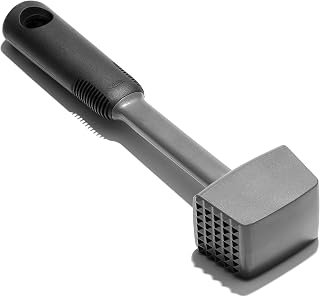
A meat mallet (also called a meat tenderizer or pounder) is a kitchen tool used to flatten and tenderize meat. It serves two distinct functions depending on the side used, and understanding these helps you get the most from it.
What a Meat Mallet Does
Tenderizing (Textured Side)
The textured face of a meat mallet has pyramid-shaped teeth or a rough surface that physically breaks down the muscle fibers and connective tissue in tough cuts of meat. Pounding with the textured side shortens the muscle fibers, reducing the chewiness of cuts like flank steak, round steak, and chicken breast. The pounding also allows marinades to penetrate more deeply.
Pounding to Even Thickness (Flat Side)
The flat face is used to pound boneless cuts (chicken breasts, pork chops, veal) to a uniform thickness. Chicken breasts vary significantly in thickness from one end to the other — the thicker end overcooks or the thin end is undercooked if the thickness is not evened out. Pounding to an even 1/2-inch thickness ensures the entire piece cooks uniformly. Thin pounded chicken also cooks significantly faster (reducing total cook time from 12-15 minutes to 4-6 minutes).
Materials
Stainless Steel
Stainless steel meat mallets are heavy enough to work efficiently without excessive arm effort, durable, non-porous, and dishwasher safe. The weight does the work — a heavier mallet requires less physical force for the same result. The OXO Good Grips meat mallet uses stainless steel construction and is frequently recommended for its durability and handle comfort.
Aluminum
Similar to stainless but lighter. Less durable over time than stainless. Adequate for occasional use.
Wood
Wooden mallets are lighter and often used for tasks where a softer impact is needed (like cracking crab or lobster shells). For meat pounding, the lack of sharp textured surface means they are primarily used as a flat pounder rather than a tenderizer. Absorbent surface can harbor bacteria if not cleaned thoroughly immediately after contact with raw meat.
Handle Design
The handle must provide a comfortable, non-slip grip and absorb some of the impact shock of repeated pounding. A longer handle provides more leverage. Spring-loaded handles that absorb impact exist on some models. The grip material should stay secure when your hand is slightly wet from handling meat.
Technique
Place the meat between two sheets of plastic wrap or in a large zip-lock bag before pounding — this prevents splatter, keeps the kitchen cleaner, and prevents the meat from tearing. Work from the center outward for even thickness. Use the textured side for tenderizing, then the flat side for evening the thickness.
Blade-Type Tenderizers
An alternative to a mallet tenderizer is a blade-type tenderizer (or jaccard) — a tool with multiple small blades or needles that pierce the meat repeatedly to break down fibers. More effective than a mallet for thick, very tough cuts. The piercing also allows marinades to penetrate more deeply. Requires thorough cleaning to remove meat residue from the blades.
What to Look For
For most home cooks, a stainless steel meat mallet with both a textured and flat face, a comfortable weighted head, and a non-slip handle covers all pounding and tenderizing tasks. The OXO Good Grips stainless meat mallet is consistently well-reviewed. For very tough cuts that need deep tenderizing, a blade-type jaccard is a useful additional tool.
Summary
A meat mallet is a simple but genuinely useful tool for tenderizing tough cuts and pounding proteins to even thickness — both of which directly improve cooking results. A quality stainless steel model with both working faces handles all standard applications and is a durable, long-term kitchen investment.
You can check more details and current options on Amazon here.