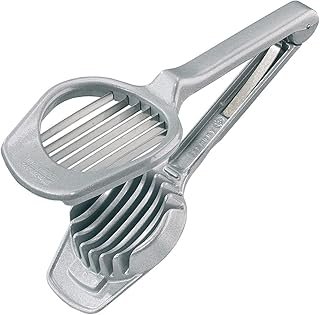
An egg slicer produces perfectly uniform slices of hard-boiled eggs quickly and consistently. It is also useful for slicing strawberries, mushrooms, bananas, and other soft foods. Understanding what makes a quality egg slicer helps you choose a durable, reliable one.
How an Egg Slicer Works
An egg slicer consists of a hinged frame with a cradle on the base (shaped to hold an egg) and a set of thin wires or blades on the top frame. The egg is placed in the cradle; pressing the top frame down drives the wires through the egg, producing evenly spaced parallel slices. The process takes about 2 seconds and produces slices far more uniform than hand-cutting.
Types of Egg Slicers
Standard Single-Slice Egg Slicer
Produces one set of parallel slices per press. Rotating the egg 90 degrees and pressing again produces a grid of cubes or dice — useful for egg salad. The most common and affordable type.
Multi-Function Egg Slicer
Includes multiple cutting frames that can be swapped or rotated to produce slices, wedges, and dice without removing the egg from the cradle. The Westmark and similar multi-cut designs allow you to slice, wedge, and dice in sequence. More versatile than a standard slicer but more complex to clean.
Wire vs. Blade
Wire Slicers
Traditional egg slicers use thin stainless steel wires under tension. The wires glide through the egg with minimal crushing or distortion of the yolk. Wires can bend or break if the egg slicer is misused (cutting very hard or large objects) or if a finger presses against a wire rather than the frame. Replacement wires are available for some models.
Blade Slicers
Some modern egg slicers use thin metal blades instead of wires. Blades are more rigid and durable than wires but require slightly more force. Produce clean cuts on eggs and firm fruits.
Material and Durability
The frame should be rigid enough not to flex during cutting — a flexible frame means wires or blades do not travel straight, producing uneven slices. Stainless steel frames are the most durable. Plastic frames are lighter and less expensive but can crack over time, particularly at the hinge. The hinge is the most common failure point — a metal hinge is more reliable than plastic.
Uses Beyond Eggs
An egg slicer slices: strawberries (halved first); mushrooms (white button and cremini); bananas; kiwi fruit (halved); small cooked potatoes; mozzarella balls. The wire type works better for soft items; harder items require the blade type or can damage wires.
Cleaning
Wires and the egg cradle collect yolk and white residue that dries quickly. Rinse immediately after use. Most egg slicers are dishwasher safe on the top rack, though the wires may weaken over time with repeated dishwasher cycles. Hand washing is gentler on the wire tension.
What to Look For
For most home cooks, a stainless steel-framed wire egg slicer with a metal hinge is the most durable and practical choice. The Westmark stainless egg slicer and the Progressive International egg slicer are frequently recommended for their wire quality, frame rigidity, and reliability.
Summary
An egg slicer is a simple, inexpensive tool that produces perfectly uniform slices much faster than a knife. Wire type, frame material, and hinge quality are the factors that determine how long it lasts. A stainless steel frame with high-tension wires is the most reliable choice for regular use.
You can check more details and current options on Amazon here.