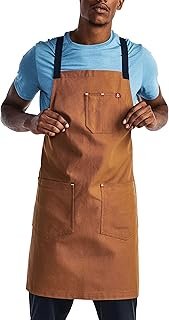
A kitchen apron protects your clothing while cooking and baking. Beyond the practical function, a well-designed apron is comfortable enough to actually wear consistently. Understanding what separates a useful apron from one that ends up unused in a drawer helps you choose wisely.
Types of Kitchen Aprons
Bib Apron
The most common kitchen apron design — covers from chest to below the knees, with straps that go around the neck and tie at the back of the waist. Provides the most protection of any apron style. Adjustable straps allow it to fit a wide range of body types. The standard choice for most home cooks and professionals.
Waist Apron (Half Apron)
Covers from the waist down, with ties around the waist. Provides no protection to the upper body. More comfortable for tasks that do not involve splashing (serving, light prep) because there is no neck strap. Less protective but less restrictive.
Cross-Back Apron
A bib apron design where the straps cross at the back rather than looping around the neck. This eliminates neck pressure and distributes the weight more evenly across the shoulders — significantly more comfortable for extended cooking sessions. The Hedley and Bennett cross-back style has become popular for this reason.
Materials
Cotton Canvas
Heavy cotton canvas is durable, absorbs spills rather than letting them bead up, and becomes more comfortable with washing. It is the most traditional material for kitchen and work aprons. A 10-12 oz cotton canvas apron will last many years with regular use.
Denim
Denim aprons are durable and look good. Similar properties to canvas — absorbent, tough, and comfortable over time. Slightly heavier than canvas.
Waxed Canvas
Waxed canvas repels liquids rather than absorbing them, which makes it easier to wipe clean between tasks. More suitable for situations where you want to keep the apron cleaner between washes. Slightly less breathable than untreated canvas.
Polyester/Synthetic Blends
Synthetic aprons are often used in commercial settings because they dry quickly and resist most food stains. Less comfortable for extended wear than natural fibers. Not the typical choice for home kitchen use.
Pocket Design
Pockets are a practical feature that home cooks underestimate. A kitchen apron with a central kangaroo pocket (a large, open-top pocket across the front) allows you to keep a kitchen timer, thermometer, or phone accessible while cooking. Multiple divided pockets allow better organization. Look for pockets that are large enough to be genuinely useful.
Adjustability and Fit
A neck strap that can be shortened or lengthened ensures the apron sits at the right height regardless of your height. Waist ties that are long enough to cross in the front and tie at the back or front provide a more comfortable, adjustable fit. One-size-fits-most is not accurate for aprons — check the length and strap range before buying.
What to Look For
For most home cooks, a cotton canvas or denim bib apron with adjustable straps, a large front pocket, and a comfortable fit is the right choice. If you cook for extended periods, a cross-back design is noticeably more comfortable than a traditional neck-strap design. Hedley and Bennett and Chef Works make well-regarded options in the higher quality tier; Utopia Kitchen and similar brands offer practical options at lower price points.
Summary
A kitchen apron is a practical tool that protects your clothes and keeps useful items accessible. Material, strap design, fit, and pocket configuration determine whether you actually wear it consistently or not. A well-fitted apron in durable canvas or denim is a kitchen staple that lasts for years.
You can check more details and current options on Amazon here.