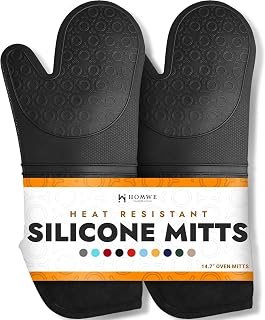
Oven mitts protect your hands and forearms from burns when handling hot cookware, baking trays, and oven dishes. The design and material of oven mitts determine how well they protect you, how much dexterity they allow, and how durable they are.
Types of Oven Protection
Oven Mitts
Traditional oven mitts cover the entire hand and a portion of the forearm. They provide more surface coverage than pot holders and are the right choice for tasks that involve holding a hot pan for more than a second or two. Most oven mitts are sold in pairs.
Pot Holders
Flat, square pads that protect the palm only. Useful for quickly removing a lid or setting a hot dish on a trivet. Less protection than a mitt for tasks that require gripping or extended holding of hot cookware. Practical as a supplement to mitts rather than a replacement.
Silicone Gloves
Flexible silicone gloves that allow more dexterity than traditional oven mitts. They are waterproof and can handle direct contact with steam and liquid (including removing boiled items from water). Good grip on smooth surfaces. The trade-off is that silicone is less insulating than layered fabric, so heat transfer is faster during extended contact.
Materials
Silicone Coating Over Fabric
A popular hybrid design — an inner fabric layer provides insulation and comfort, while an outer silicone layer provides grip and resistance to steam. Better heat protection than plain silicone gloves with better dexterity than traditional quilted fabric mitts. Ove Glove and similar products use this approach.
Aramid/Nomex Fiber (Professional)
Aramid fiber (used in Ove Glove and similar professional designs) provides excellent heat resistance — rated to 260°C+ in some models. These are the most protective fabric-type oven mitts available. More expensive but significantly better protection than standard cotton quilted designs.
Cotton Quilted
Traditional quilted cotton mitts are widely available and affordable. They provide adequate protection for typical home oven temperatures (up to around 200°C contact) but are less effective against steam and can become dangerous if they absorb moisture (wet fabric conducts heat). They wear out faster than silicone or aramid alternatives.
Heat Rating
Oven mitts are rated to different maximum temperatures. Most home oven use peaks at 220-230°C surface contact. Ensure the mitts you choose are rated at least to this temperature. Grilling and high-heat cooking may require mitts rated higher (260°C+).
Forearm Coverage
The length of oven mitts matters when reaching into a deep oven or pulling a Dutch oven from the lower rack. Short mitts (20-25 cm) protect the hands and wrists. Long mitts (35-45 cm) protect the forearms as well — important for reaching past the oven rack.
Grip
A smooth fabric surface offers limited grip on smooth metal or glass. Silicone pads, dots, or coating on the grip surface improve purchase on slippery cookware — important when carrying a full Dutch oven or cast iron skillet.
What to Look For
For most home cooks, a pair of silicone-coated aramid fiber oven mitts (or high-quality silicone over fabric) with forearm coverage of at least 35 cm is the best choice. The Ove Glove and Cuisinart silicone grip mitts are frequently recommended for their combination of dexterity, protection, and durability.
Summary
Oven mitts are a safety-critical kitchen tool where material, heat rating, forearm length, and grip quality determine how well they protect you. A quality pair in silicone-coated aramid or heavy silicone provides significantly better protection and durability than basic cotton quilted alternatives.
You can check more details and current options on Amazon here.